V-Shaped Ribbed Belts

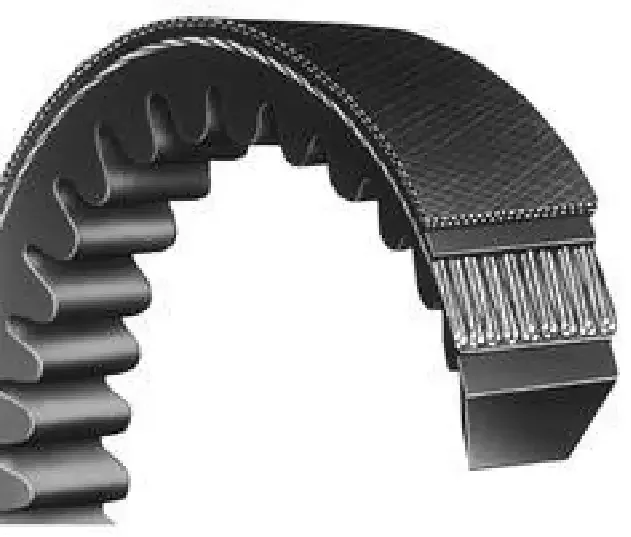
V-shaped toothed belts that are produced in a mold are resistant to heat and oil and are anti-static. The main and major difference between standard V-shaped belts and toothed V-shaped belts is that the toothed belt has the ability to rotate around a small pulley and increase the amount of heat dissipation (the amount of heat generated between the belt and the pulley during movement). If the pulley of your device is small, the teeth of the belt cause the belt to grip the pulley well and increase the adhesion of the belt to the pulleys. Due to their resistance to longitudinal changes, it is possible to operate multiple belts together. These toothed belts have a longer useful life due to their high flexibility, proper seating in the pulley groove and less heat generation during operation.
Application
V-belts with toothed edges are a new generation of V-belts. These belts have a wide range of applications, especially in industrial applications with small pulleys and high speeds. The overall advantage of toothed belts over plain belts, which includes cost-effectiveness, better power transmission and better durability, quickly created a significant revolution in the belt industry.
Types of V-shaped ribbed belts:
AX with a width of 13 mm
BX with a width of 17 mm
CX with a width of 22 mm
DX with a width of 32 mm
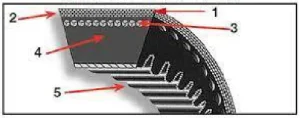
Structure of V-belts
- Fabric cover
- Upper rubber made of CR or EPDM.
- Reinforcing polyester yarns
- Bottom tire
- Teeth
V-belt components